Indroduction ...
In the dynamic industrial environment of the UAE — from oil & gas, manufacturing, aerospace, to pharmaceuticals — accurate measurement and instrumentation play a critical role. Regular calibration of devices ensures precision, safety, regulatory compliance, and operational efficiency.
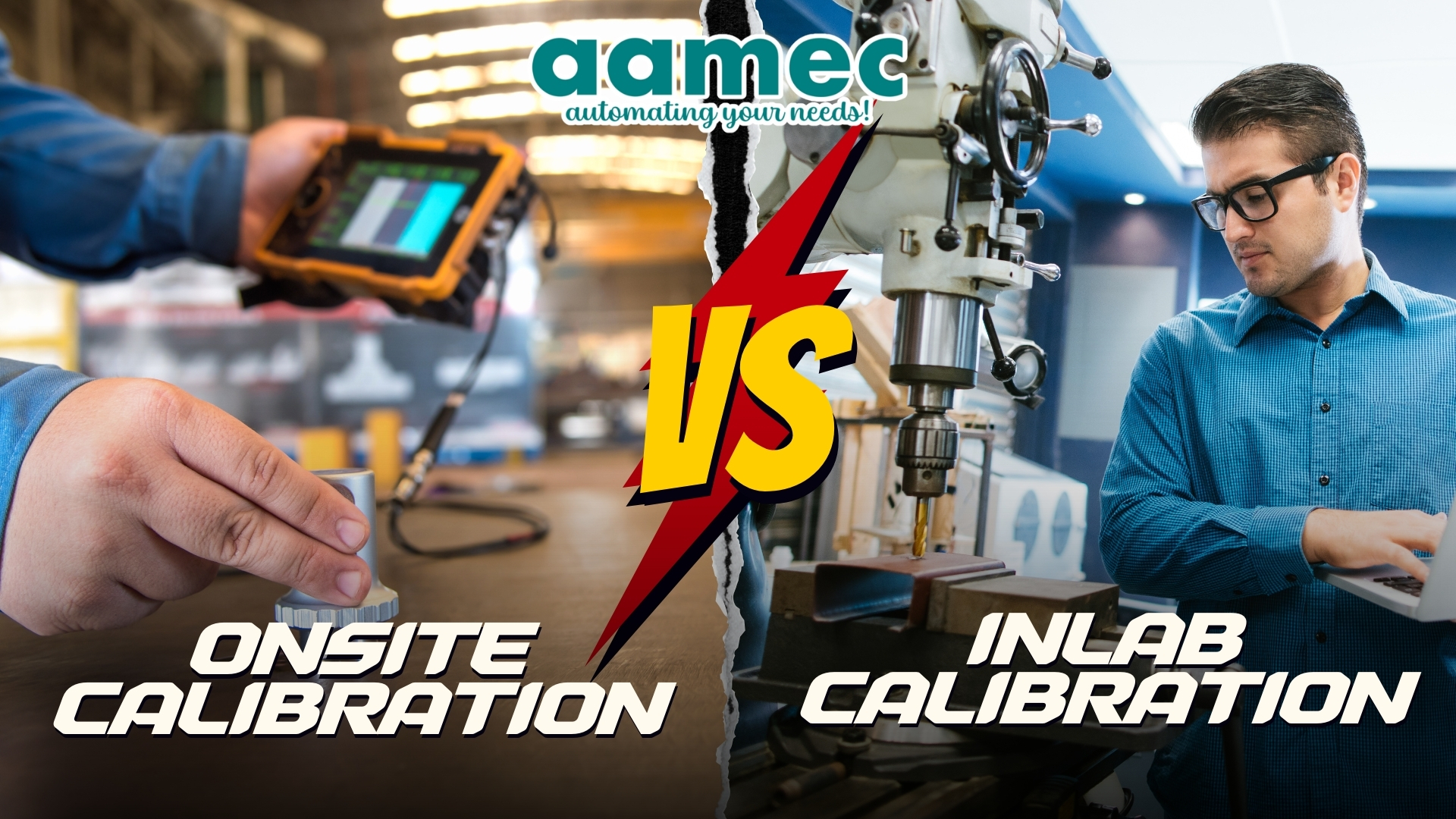
When it comes to calibration, companies often face a key decision: should they opt for on-site calibration (performed at their facility) or in-lab calibration (equipment is sent to a specialized lab)? Each method has its advantages and drawbacks. In this blog, we explore the pros and cons of on-site vs in-lab calibration and share best practices tailored for UAE industries.
What is Calibration — and Why It Matters in UAE Industries
Calibration is the process of verifying and, if necessary, adjusting measurement instruments to ensure their accuracy. Over time, due to mechanical stress, environmental factors (like temperature, humidity, vibration), or wear and tear, instruments can drift — causing readings to deviate from the true value.
For industries operating in the UAE — where conditions (e.g. heat, humidity, dust) and regulatory standards demand high precision — proper calibration becomes especially important. Non-calibrated or poorly calibrated instruments may lead to faulty measurements, compromised product quality, regulatory non-compliance, and safety hazards.
Moreover, using accredited calibration services helps meet international standards (e.g. ISO/IEC 17025) and ensures traceability to recognized national or international reference standards.
In-Lab Calibration: Pros and Cons
Advantages of In-Lab Calibration
- Highest Accuracy & Low Measurement Uncertainty — Labs provide a controlled environment (stable temperature, humidity, no vibrations), reducing external variables and enabling precise calibration against master reference standards.
- Use of Primary/Certified Reference Standards — Labs often have access to high-end, traceable equipment not feasible to transport to field sites. This enhances the credibility and reliability of calibration.
- Full Traceability & Compliance — Certificates issued after lab calibration are often internationally recognized, meeting strict regulatory or industry requirements.
Comprehensive Testing for Sensitive Instruments — For delicate or highly sensitive devices (e.g. in aerospace, pharmaceuticals, R&D), lab calibration is often indispensable.)
Disadvantages of In-Lab Calibration
- Downtime & Operational Disruption — Equipment must be removed, shipped to the lab and reinstalled. For critical processes, this downtime can be costly.
- Logistics, Shipping Risk & Costs — Transporting instruments — especially large, delicate, or sensitive devices — may risk damage or loss. Shipping costs add up.
Delay in Turnaround — Depending on lab workload, shipping, and logistics, calibration may take time — which might not suit urgent needs
Best Suited For
- Industries or devices requiring maximum accuracy and traceability (e.g. aerospace, pharmaceuticals, high-precision manufacturing).
- Sensitive instruments where environmental factors must be strictly controlled.
- Scheduled, periodic calibrations when downtime can be planned in advance
On-Site Calibration: Pros and Cons
Advantages of On-Site Calibration
- Minimal Downtime / Disruption — Calibration happens directly at the facility; no need for dismantling or shipping. Ideal for continuous or 24/7 operations.
- Operational & Logistical Efficiency — Especially useful for large, fixed systems or many instruments — a technician can calibrate multiple devices in one visit.
- Real-World Conditions — Instruments are calibrated under actual operating conditions (temperature, humidity, ambient noise, vibration), which reflects real usage environment.
- Faster Turnaround & Convenience — Great for urgent calibration needs or frequent calibration cycles.
- Reduced Risk of Transit Damage — Since instruments stay on-site, there’s no risk associated with shipping or handling.
Disadvantages of On-Site Calibration
- Higher Measurement Uncertainty — Because environmental conditions are less controlled (ambient temperature, humidity, vibration), on-site calibration tends to produce slightly less precise results compared to lab calibration.
- Limited Scope and Standards — Some instruments require primary reference standards or specific lab-grade equipment that cannot be brought on-site. For such devices, on-site calibration may not be accepted for certification or regulatory compliance.
- Potential Non-Compliance for Sensitive Equipment — For highly sensitive instruments, on-site calibration may not meet stringent industry or regulatory standards.
- Higher Measurement Uncertainty — Because environmental conditions are less controlled (ambient temperature, humidity, vibration), on-site calibration tends to produce slightly less precise results compared to lab calibration.
Best Suited For
- Industries with large or fixed equipment (e.g. oil & gas, heavy manufacturing, power plants).
- Operations where downtime is costly or impractical, or for frequent calibration needs.
Calibration of instruments where ultra-high precision is not critical, but operational continuity is.
Best Practices for Calibration in UAE
Dimensional, electrical, and pressure calibration are all
To get the most out of your calibration — whether on-site or in-lab — follow these best practices:
- Choose Accredited Labs/Providers: Ensure calibration is done by a provider accredited under standards like ISO/IEC 17025. This ensures traceability, reliability, and compliance.
- Maintain Calibration Records: Keep detailed logs and certificates of each calibration — showing before/after measurements, measurement uncertainty, standards used, and calibration date. This helps during audits and quality assessments.
- Schedule Regular Calibration Intervals: Depending on how instruments are used, environmental conditions, and criticality — schedule calibrations annually or as per manufacturer/regulatory recommendations.
- Adopt a Hybrid Calibration Strategy: For many UAE industries — especially diversified operations — combining both on-site and in-lab calibration can optimize cost, downtime, and accuracy.
- Document Environmental Conditions (On-Site): When calibrating on-site, log ambient conditions (temperature, humidity, vibration), so that measurement uncertainty is acknowledged and traceability maintained.
- Plan Calibration During Maintenance Windows: To reduce operational disruption, schedule calibration during planned shutdowns or maintenance periods.
Ensure Traceability to Recognized Standards: Calibration should reference national or international standards (e.g. those maintained by recognized bodies such as NIST or similar), to ensure validity and acceptance.
essential services for industries in UAE that rely on precise and accurate instruments. By choosing the right calibration service for your equipment, you can ensure safety, compliance, and operational efficiency. AAMEC offers ISO-certified calibration services that guarantee the accuracy and reliability of your instruments. Whether you need dimensional, electrical, or pressure calibration, we provide the expertise and quality you can trust. Contact AAMEC today to schedule your calibration service and keep your operations running smoothly.
Conclusion
For industries operating in the UAE — where precision, compliance, safety, and efficiency are vital — calibration is not optional. The choice between on-site vs in-lab calibration hinges on your operational context, instrument sensitivity, and business priorities.
- Go for in-lab calibration when you need maximum accuracy, traceability and compliance — especially for sensitive or regulated instruments.
- Opt for on-site calibration when downtime must be minimized, you have large or fixed equipment or when frequent calibration is needed.
- For many organizations, a hybrid strategy offers the balance — critical instruments get lab-calibrated, and routine or bulky equipment gets calibrated on-site.
By following calibration best practices — accreditation, regular scheduling, proper documentation, and clear traceability — UAE industries can ensure their measurement systems remain accurate, reliable, and compliant — ultimately safeguarding quality, safety, and productivity.