Introduction
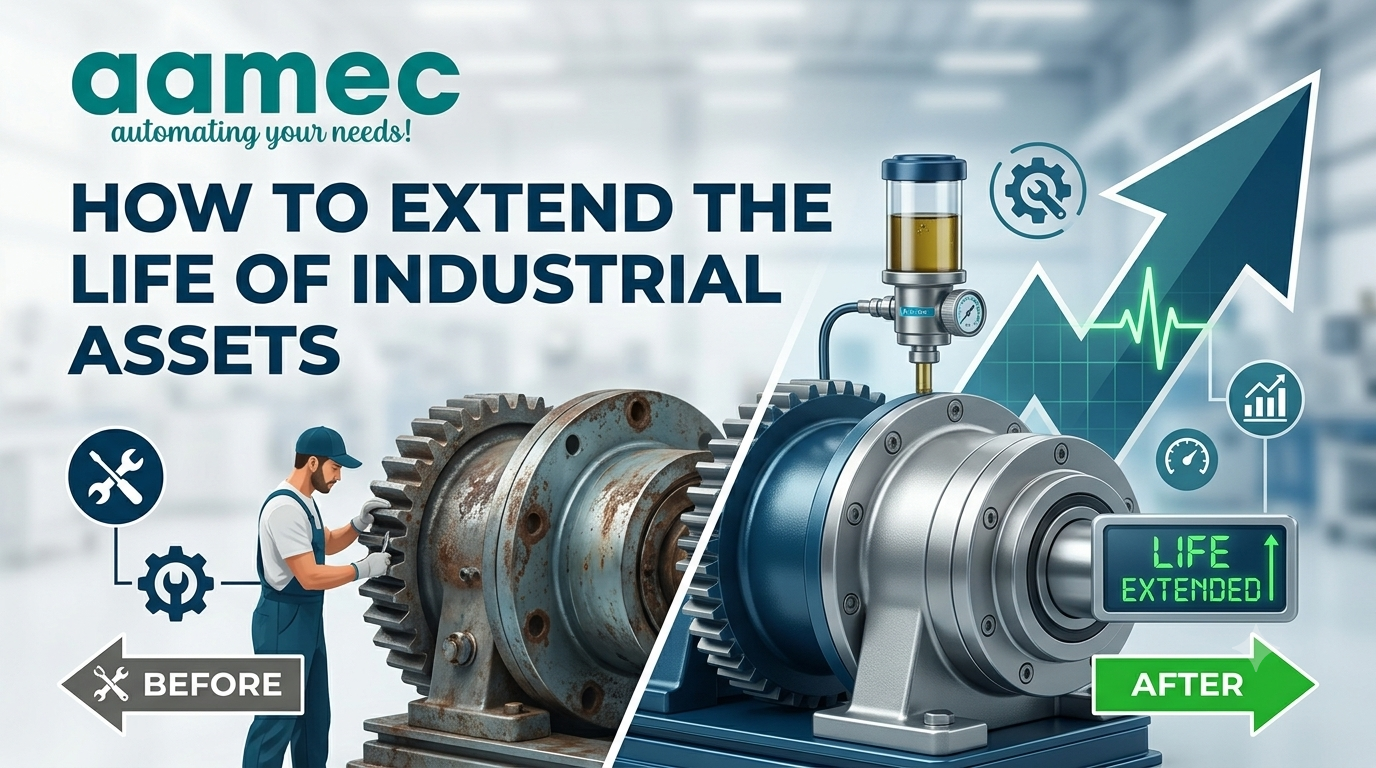
Industrial equipment represents a major investment for manufacturing plants, engineering companies and other industrial businesses. Replacing machinery before the end of its useful operating life can require significant capital, installation time and production disruption. This is why businesses need a practical strategy to extend equipment life while maintaining safe and reliable operation.
Equipment does not usually reach the end of its service life because of one single event. Gradual wear, poor lubrication, excessive loading, misalignment, contamination, inadequate inspection and incorrect operation can progressively reduce equipment condition.
A well-planned industrial asset maintenance strategy helps identify these problems earlier. Regular inspection, preventive maintenance, condition monitoring and proper operating practices can help equipment remain reliable for longer and reduce avoidable replacement costs.
Quick Answer: How Can You Extend Equipment Life?
The most effective ways to extend equipment life include:
- Following a planned preventive maintenance schedule
- Inspecting equipment regularly
- Maintaining proper lubrication
- Correcting alignment and vibration problems
- Operating machinery within its design limits
- Monitoring equipment condition
- Replacing worn components before secondary damage occurs
- Keeping accurate maintenance records
- Using suitable spare parts
- Investigating repeated failures
- Training operators and maintenance personnel
The objective is not simply to keep old equipment running. Equipment should remain in a condition where it can perform its required function safely and reliably.
What Does Equipment Life Mean?
Equipment life refers to the period during which a machine or industrial asset can perform its intended function at an acceptable level of safety, reliability and performance.
An asset can technically continue operating for many years while its reliability gradually decreases. Frequent breakdowns, increasing maintenance requirements and declining performance may indicate that the equipment is approaching the end of its practical service life.
This is why equipment lifecycle management is important. Maintenance decisions should consider the complete lifecycle of an asset rather than focusing only on individual repairs.
1. Create a Preventive Maintenance Plan
The foundation of a good equipment-life strategy is preventive maintenance.
Routine maintenance activities can address lubrication, inspection, adjustment, cleaning, tightening, component replacement and other equipment-specific requirements.
The maintenance frequency should not be identical for every machine. Criticality, operating hours, environmental conditions, equipment design and historical failures should all be considered.
A machine operating continuously under a heavy load may require a different maintenance approach from equipment used intermittently under lighter conditions.
2. Perform Regular Equipment Inspections
Regular equipment inspection helps identify physical deterioration before it becomes a major failure.
Depending on the equipment, inspection may include checking for unusual noise, vibration, leakage, corrosion, loose components, abnormal temperatures or visible wear.
Inspection findings should be documented rather than relying on memory. Over time, these records can reveal whether a condition is stable, improving or deteriorating.
For facilities requiring industrial equipment inspection UAE services, the inspection scope should be based on the type, condition and operational importance of the equipment.
3. Maintain Proper Lubrication
Lubrication is one of the simplest but most important aspects of machine maintenance.
Insufficient lubricant can increase friction and wear, while excessive lubricant can also create problems in certain applications. Using the wrong lubricant or mixing incompatible products may affect equipment performance.
A proper lubrication program should define the lubricant type, quantity, application method and maintenance interval for relevant components.
Lubrication records can also help identify whether repeated failures are associated with missed or incorrectly performed maintenance activities.
4. Control Vibration and Misalignment
Excessive vibration is often a sign that something within rotating equipment requires attention.
Possible causes include imbalance, misalignment, looseness, bearing deterioration or other mechanical conditions. If these problems remain unresolved, they can place additional stress on connected components.
Addressing the underlying cause instead of simply replacing the damaged component is important for long-term equipment reliability.
Alignment should also be checked after relevant maintenance work or equipment modifications where appropriate.
5. Avoid Overloading Equipment
Industrial machines are designed around specific operating conditions. Continuous operation beyond the intended load can increase mechanical and thermal stress.
Overloading can accelerate wear in bearings, gears, motors, couplings and other components. It can also increase energy consumption and affect production quality.
Production teams and maintenance personnel should understand the equipment’s operating limits and identify situations where production requirements are placing unusual demands on the machinery.
6. Monitor Equipment Condition
Not every developing equipment problem can be identified through a basic visual inspection.
Condition monitoring provides additional information about equipment performance and physical condition. Depending on the machinery, relevant parameters may include vibration, temperature, lubrication condition or other measurable characteristics.
The value of condition monitoring comes from observing changes over time. A single measurement may provide useful information, but historical trends can provide a stronger indication of deterioration.
7. Replace Worn Components at the Right Time
Waiting until a component completely fails is not always the most cost-effective approach.
A worn bearing, seal, belt or coupling may initially affect only one part of a machine. Continued operation can eventually damage shafts, housings, gears or other connected components.
Planned replacement based on inspection findings, operating history and manufacturer recommendations can help prevent secondary damage.
However, components should not automatically be replaced simply because they have reached a certain age. Actual operating condition and equipment requirements should also be considered.
8. Use Suitable Spare Parts
The quality and suitability of replacement components can affect equipment performance.
Replacement parts should meet the required specifications and be compatible with the equipment. An unsuitable component may create additional wear or cause premature failure.
For critical machinery, businesses should also identify components with long procurement lead times and maintain an appropriate spare-parts strategy.
This becomes especially important when equipment failure could stop an entire production process.
9. Keep Accurate Maintenance Records
A maintenance record is more than an administrative document. It provides a history of how the equipment has behaved throughout its operating life.
Useful records can include:
- Inspection findings
- Maintenance dates
- Lubrication activities
- Component replacements
- Breakdown history
- Abnormal observations
- Repair details
- Condition-monitoring measurements
When a machine repeatedly develops the same problem, these records can help maintenance teams identify patterns and investigate the underlying cause.
10. Investigate Repeated Failures
Repeated component replacement without investigating the underlying problem can increase maintenance costs without improving equipment reliability.
For example, if a bearing fails several times within a short period, maintenance personnel should consider whether alignment, lubrication, contamination, loading, installation or operating conditions are contributing to the problem.
Root cause analysis can help identify why the failure keeps occurring and what corrective action is required.
The goal is to fix the reason for the failure, not just replace the failed part.
11. Keep Equipment Clean and Protected
Dust, moisture, chemicals and other contaminants can affect industrial equipment.
Contamination can enter bearings, lubrication systems and other mechanical components. Moisture and chemicals can also contribute to corrosion and deterioration.
Cleaning should therefore be treated as part of the overall maintenance strategy rather than only as an appearance-related activity.
The appropriate cleaning method will depend on the equipment and operating environment. Cleaning processes should not introduce additional moisture or contamination into sensitive components.
12. Train Equipment Operators
Operators interact with machinery every day and may be the first people to notice a change in equipment behaviour.
Training should help operators identify abnormal noise, vibration, leakage, temperature, machine performance and other warning signs.
Operators should also understand correct startup, shutdown and operating procedures.
Early reporting can give maintenance teams an opportunity to investigate a problem before it develops into a major machine failure.
Equipment Life Extension vs Equipment Replacement
Extending equipment life does not mean keeping every machine in service indefinitely.
At some point, continued maintenance may no longer be practical when compared with replacement. The decision should consider equipment condition, maintenance cost, reliability, safety, production requirements and availability of replacement parts.
| Condition | Possible approach |
|---|---|
| Equipment is reliable and condition is stable | Continue planned maintenance |
| Minor deterioration is detected | Correct condition and monitor |
| Repeated failures occur | Investigate root cause |
| Maintenance cost is increasing | Perform lifecycle assessment |
| Parts are becoming difficult to obtain | Review replacement options |
| Equipment no longer meets operational requirements | Consider replacement |
This approach helps businesses make maintenance decisions based on actual equipment condition rather than age alone.
How Maintenance Extends Equipment Life
The basic principle behind extending equipment life is simple: control deterioration before it becomes severe.
For example, correcting misalignment early can reduce stress on bearings and couplings. Maintaining proper lubrication can reduce unnecessary friction. Detecting corrosion early can allow appropriate corrective action before the affected component becomes significantly weakened.
These individual maintenance activities work together as part of a broader industrial asset maintenance strategy.
The Importance of Asset Criticality
Not every machine requires the same level of maintenance.
A failure in a critical production machine may stop an entire process, while failure of a less critical machine may have a limited operational impact.
Businesses can classify assets according to factors such as production impact, safety risk, replacement cost, failure frequency and repair time.
Critical assets can then receive greater inspection attention and more detailed maintenance planning.
Using Maintenance Data for Better Decisions
Maintenance history can help businesses move from reactive decisions toward evidence-based maintenance.
If records show that a particular component consistently fails after a specific operating period, the maintenance schedule can be reviewed. If condition-monitoring data shows gradual deterioration, a repair can potentially be planned before the equipment reaches a critical condition.
This approach makes industrial asset management UAE more practical because maintenance decisions are connected to actual equipment performance.
Extending Equipment Life in UAE Industrial Facilities
Industrial facilities across Dubai, Abu Dhabi, Sharjah, Ajman, Ras Al Khaimah and Fujairah operate equipment under different production and environmental conditions.
Industrial areas such as Jebel Ali, Dubai Industrial City and Mussafah contain a wide range of manufacturing, engineering and industrial operations. Equipment may operate for extended periods, making maintenance planning particularly important for businesses that depend on continuous production.
A practical industrial maintenance UAE strategy should consider operating hours, equipment age, environmental exposure, production loads and the availability of technical support and spare parts.
Local conditions should be considered when developing inspection and maintenance intervals rather than applying a generic schedule to every facility.
A Practical Equipment Life Extension Checklist
Businesses can use the following checklist when reviewing their equipment maintenance strategy:
- Maintain an up-to-date equipment register.
- Identify critical machinery.
- Establish equipment-specific maintenance schedules.
- Follow manufacturer maintenance requirements.
- Perform regular equipment inspections.
- Monitor vibration and temperature where appropriate.
- Maintain correct lubrication practices.
- Check alignment and mechanical condition.
- Avoid continuous equipment overloading.
- Record all repairs and component replacements.
- Investigate repeated failures.
- Maintain critical spare parts.
- Train operators to identify warning signs.
- Review equipment performance periodically.
- Assess replacement requirements before reliability becomes unacceptable.
When Should Professional Inspection Be Considered?
Professional equipment inspection can be useful when equipment shows abnormal operating behaviour, repeated failures, significant deterioration or uncertain operating condition.
It may also be appropriate when a business needs a technical assessment before making decisions about continued operation, maintenance or equipment replacement.
The inspection should have a clearly defined purpose. The appropriate methods depend on the equipment type, operating conditions and specific concern being investigated.
Businesses looking for industrial equipment maintenance UAE or inspection support should therefore first identify the equipment, problem and desired outcome so that the technical scope can be properly defined.
How AAMEC Supports Equipment Maintenance Requirements
AAMEC provides inspection, testing and related technical services for industrial and engineering requirements. Technical assessment can help businesses understand the condition of relevant equipment and support maintenance decisions.
For facilities across the UAE, inspection can form part of a wider strategy that includes preventive maintenance, condition monitoring, maintenance records and asset lifecycle planning.
The objective is to help businesses make informed technical decisions about their industrial assets rather than relying only on breakdown-based maintenance.
Frequently Asked Questions
How can I extend the life of industrial equipment?
You can extend equipment life through regular preventive maintenance, proper lubrication, equipment inspection, condition monitoring, correct operation, timely component replacement and investigation of recurring failures.
Does preventive maintenance increase equipment lifespan?
Yes, appropriate preventive maintenance can help control wear and deterioration by addressing known maintenance requirements before they develop into major failures. The actual benefit depends on equipment type, operating conditions and how effectively the maintenance program is implemented.
What reduces the lifespan of industrial machinery?
Poor lubrication, overloading, contamination, corrosion, misalignment, excessive vibration, improper operation, delayed repairs and inadequate maintenance can all contribute to accelerated equipment deterioration.
How does condition monitoring help extend equipment life?
Condition monitoring can identify changes in equipment behaviour before a serious failure occurs. Early detection can allow maintenance teams to investigate and correct developing problems before they cause extensive secondary damage.
Should old industrial equipment always be replaced?
Not necessarily. Equipment age alone does not determine whether it should be replaced. Condition, reliability, maintenance costs, spare-parts availability, safety and operational requirements should all be considered.
How often should industrial equipment be inspected?
There is no single inspection frequency suitable for every machine. Frequency should consider equipment criticality, manufacturer recommendations, operating conditions, failure history and applicable technical requirements.
Why is lubrication important for equipment life?
Correct lubrication helps control friction and wear in relevant mechanical components. Incorrect lubricant selection, insufficient lubrication, excessive lubrication or contamination can contribute to premature component deterioration.
What is the role of maintenance records in equipment life extension?
Maintenance records provide historical information about inspections, repairs, failures and component replacements. This information can help identify recurring problems and improve future maintenance planning.
Conclusion
To extend equipment life, businesses need to focus on controlling deterioration rather than waiting for equipment to fail. Preventive maintenance, regular inspection, proper lubrication, condition monitoring and correct operation all contribute to maintaining equipment condition.
A successful equipment-life strategy also requires accurate maintenance records and investigation of repeated failures. These practices help maintenance teams understand why equipment deteriorates and where corrective action is required.
For industrial businesses in the UAE, a structured industrial equipment maintenance UAE approach can support longer asset service life while reducing avoidable breakdowns and unplanned production interruptions. The objective is not simply to keep equipment operating for as long as possible, but to maintain it in a condition where it continues to perform safely and reliably.